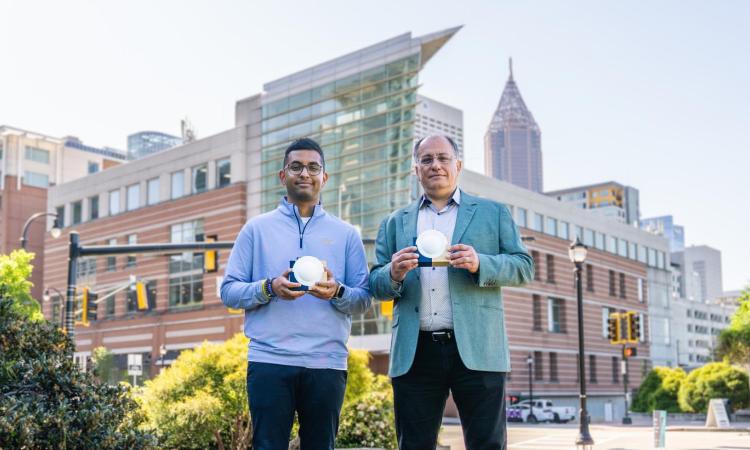
Emmanouil Tentzeris and Marvin Joshi’s new work demonstrates how a lens‑enabled backscatter system can deliver modern wireless capability without traditional transmitters.
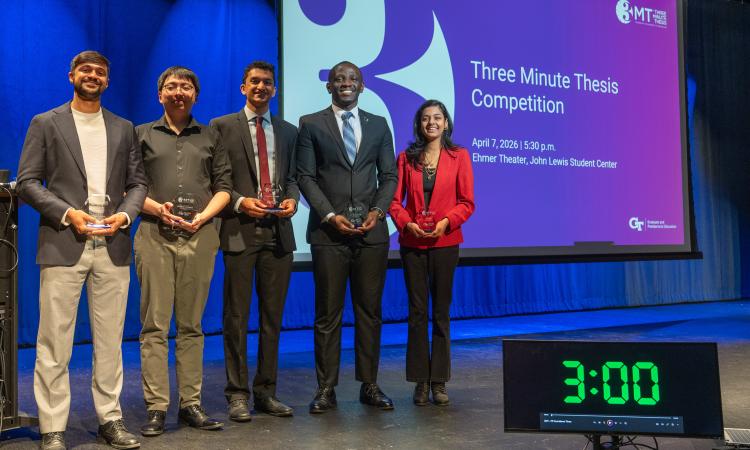
ECE undergraduate student Shreya Iyer was one of two Georgia Tech students to receive the award and will use it to join the Laboratory of Sustainability Robotics.
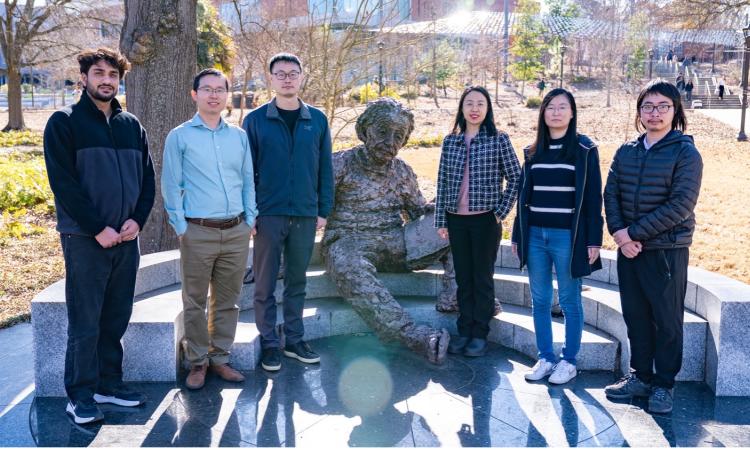
The Renewable Bioproducts Institute (RBI) has announced its newest cohort of 12 fellowship projects, an expansion that reflects both growing interest and a broader vision for bioproducts research at Georgia Tech.
The Georgia Tech School of Electrical and Computer Engineering celebrated its outstanding students, staff, and faculty at the 2026 Roger P. Webb Awards Program.
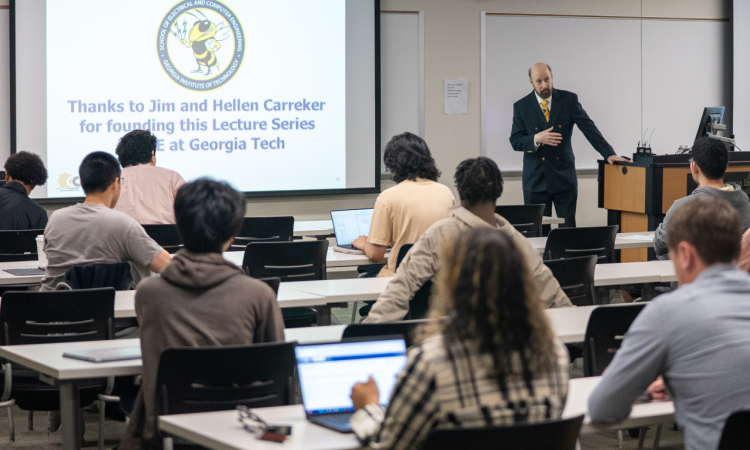
Professor Emeritus Russell Dupuis became the first ECE faculty member to headline the series, offering a career’s worth of perspective on semiconductor innovation and its real-world impact.
The Georgia Tech School of Electrical and Computer Engineering graduate programs were both ranked in the top seven in the 2026 U.S. News and World Report rankings.