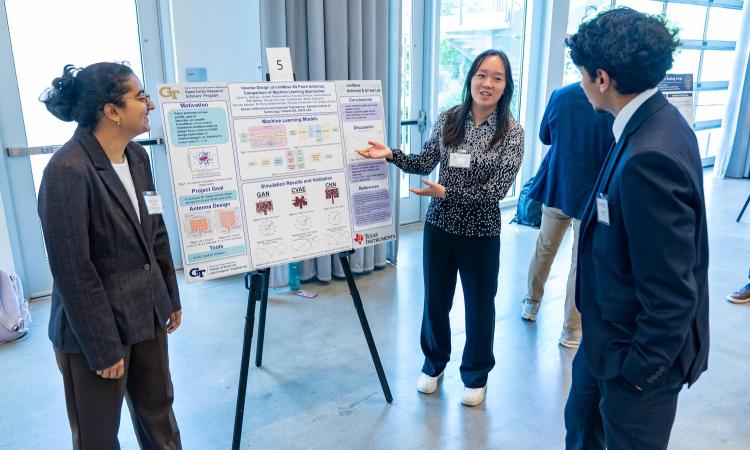
The annual symposium allows undergraduate students to present their research projects and submit them as conference papers, giving them practical experience early in their academic careers.
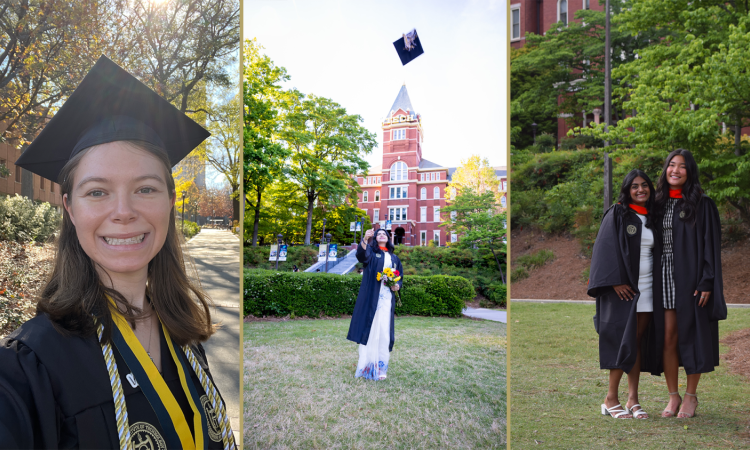
As the Spring 2026 ECE graduates prepare to cross the stage and embark on their next chapter, they reflect on the people and communities that helped them find their way.
The medals recognize James McClellan’s impact on digital signal processing curriculum development and Biing‑Hwang “Fred” Juang’s role in defining modern speech and audio signal processing.
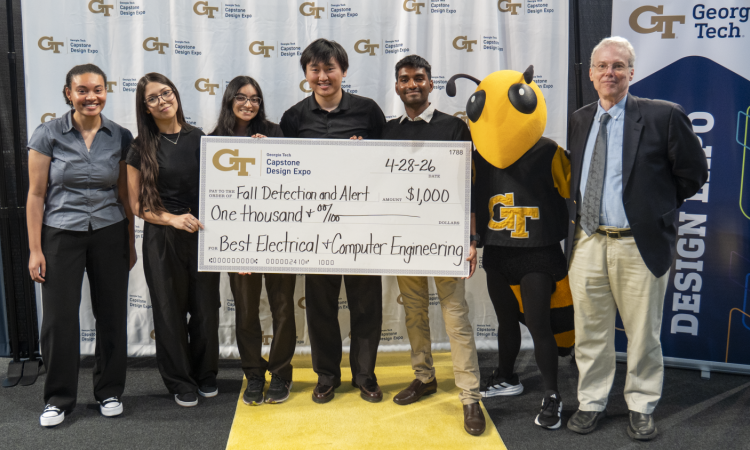
The noninvasive fall detection system was named the School’s top project by judges, while ECE students also contributed to the Best Interdisciplinary and Best Overall Project Award winners.
Using artificial intelligence, the team is developing an edible vaccine that could protect birds from bird flu and reduce its spread to livestock and humans.