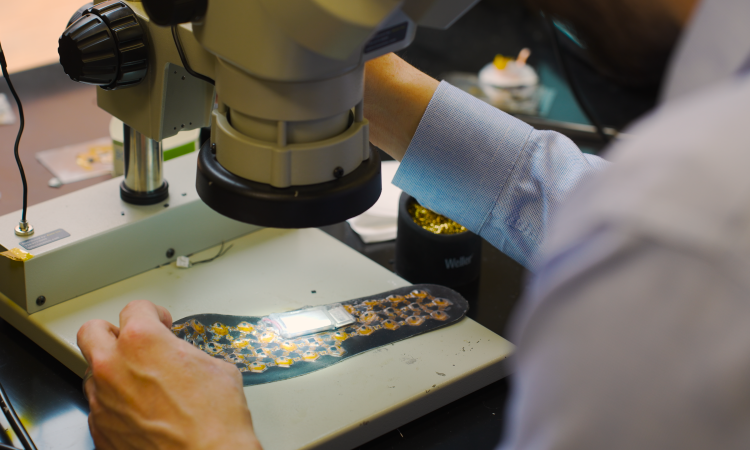
Researchers have developed a wireless wearable that translates foot pressure into heat and vibration, helping individuals with sensory impairments regain balance and mobility.
A newly discovered vulnerability could allow cybercriminals to silently hijack the artificial intelligence (AI) systems in self-driving cars, raising concerns about the security of autonomous systems increasingly used on public roads.
With the help of a contract award for up to $12 million from ARPA-H, a team of researchers led by the School of Cybersecurity and Privacy at will begin developing an advanced cybersecurity platform to protect hospitals.
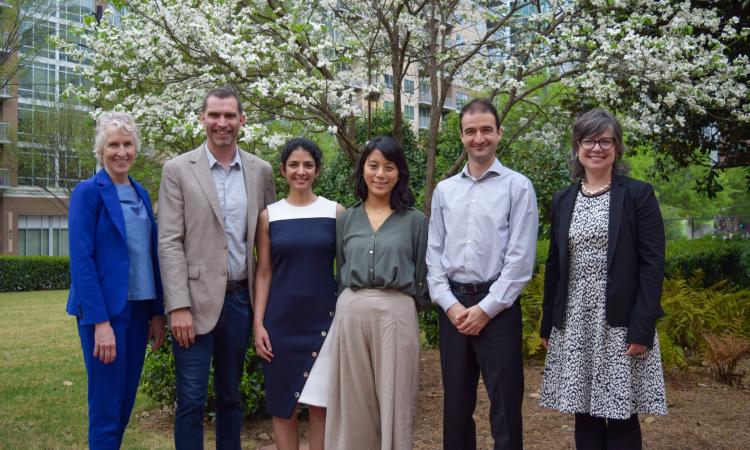
Christopher Rozell to lead Georgia Tech’s new Institute for Neuroscience, Neurotechnology, and Society, uniting disciplines to tackle the brain’s greatest challenges.
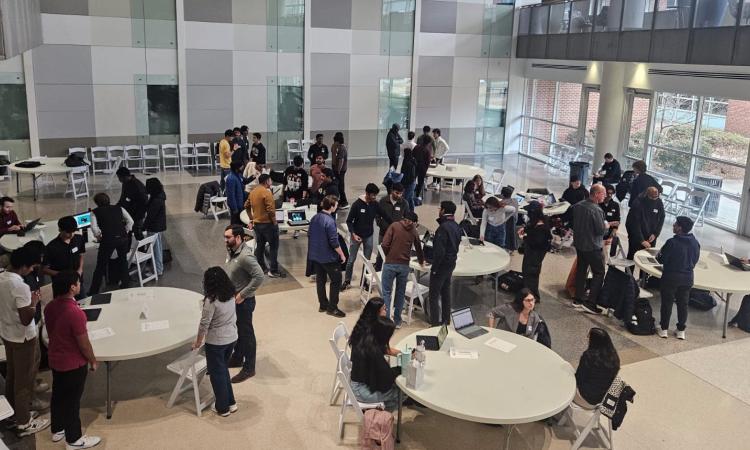
“Current Crisis,” a power grid modeling video game developed through the Georgia Tech VIP project led by Dan Molzahn, EPIcenter's initiative lead, simulates real-world power grid challenges.
The College of Sciences’ signature research event featured thought-provoking discussions at the intersection of neuroscience, cognition, and artificial intelligence.
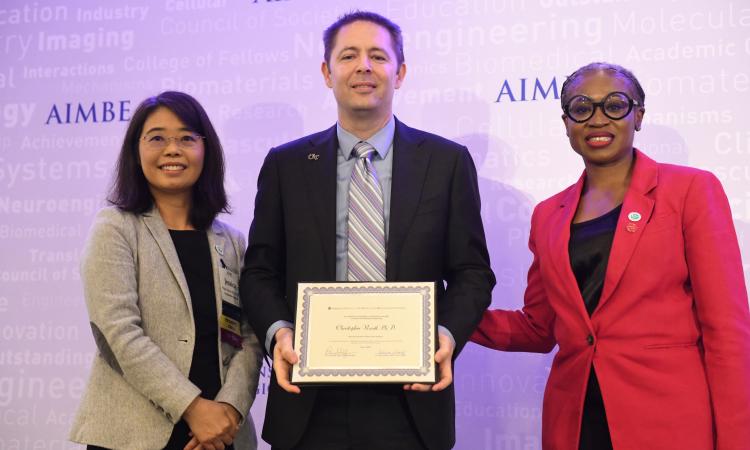
The ECE professor awarded the prestigious distinction for outstanding contributions to computational neuroengineering, psychiatric neuromodulation, and international leadership in accessible biomedical education.
Researchers at Georgia Tech, funded by a $4 million DARPA grant, are developing METALLIC, a framework to analyze and mitigate exploit chains—complex, multi-step cyberattacks.
The Strategic Energy Institute and the Energy, Policy, and Innovation Center at Georgia Tech are proud to announce the winner of the James G. Campbell Fellowship and the 2024 cohort of the annual Spark Awards.
Eight Georgia Tech researchers were honored with the ACM Distinguished Paper Award for their contributions to cybersecurity at the ACM Conference on Computer and Communications Security (CCS).
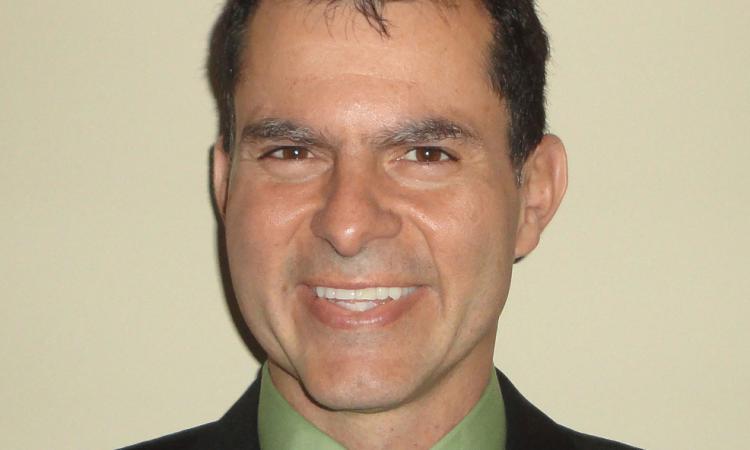
Hernandez-Mejia, who has worked at ECE’s National Electric Energy Testing, Research, & Applications Center (NEETRAC) since 2017, brings extensive experience to the member-driven electric utility research center.
Stanislav Emelianov, Joseph M. Pettit Endowed Chair, Georgia Research Alliance Eminent Scholar has been named co-director of the Children’s Healthcare of Atlanta Pediatric Technology Center.
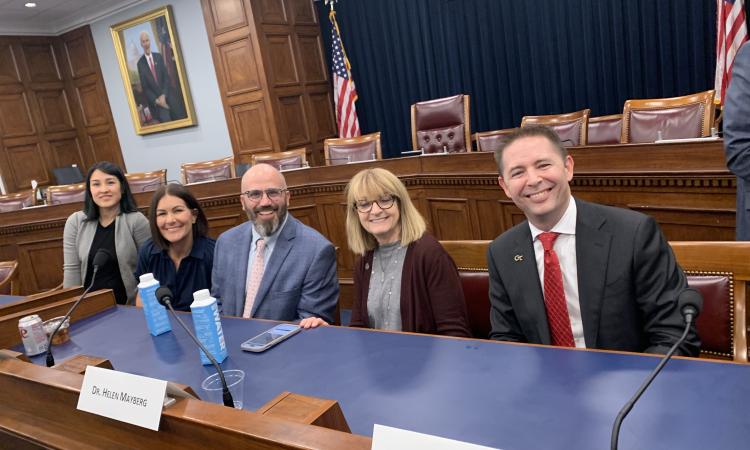
Chris Rozell traveled to Washington, D.C. to share the impacts of the past decade of brain research funded by the NIH BRAIN Initiative with Congress — and share with local representatives how Georgia Tech is playing a key role in leading the charge.
The research proposed by a team featuring Professor Biing-Hwang Juang introduces DeepSC, a deep learning-based semantic communication system designed for text transmission.
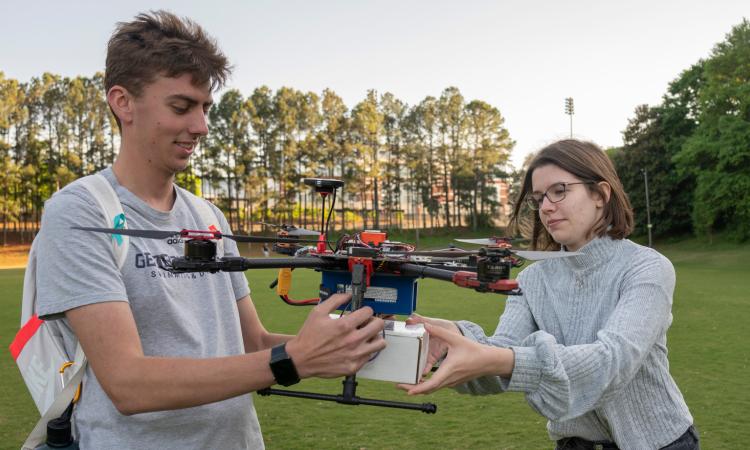
Imagine you’re a college student cramming for a test in your dorm room. What if there was a way for the school supplies and food to be delivered right to your dorm – not by car or foot, but by drone?
In June, some of the world’s top technologists in the VLSI industry will convene in Honolulu for one of the premier symposiums for microelectronics and semiconductor research.
The search for the new GTRI Deputy Director for Research for the Information and Cyber Sciences Directorate (ICSD) is complete, and on April 18, William H. Robinson, Ph.D., will assume the role.
The School of Electrical and Computer Engineering (ECE) is pleased to announce the appointment of our newest faculty member, Cong (Callie) Hao, and her appointment to the Sutterfield Family Early Career Professorship.
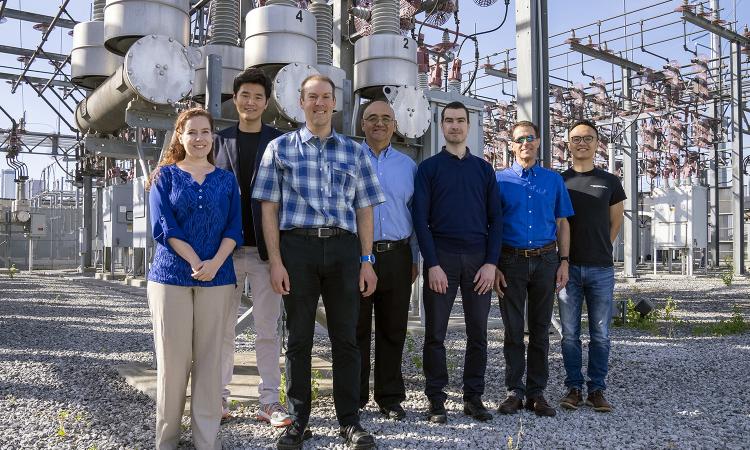
Replacing the potent greenhouse gas SF6 in high-voltage circuit breakers with a clean alternative is critical as the U.S. looks to upgrade its aging electrical infrastructure.
The paper presents a physical design tool named Compact-2D that automatically builds high-density and commercial-quality monolithic three-dimensional integrated circuits (3D ICs).
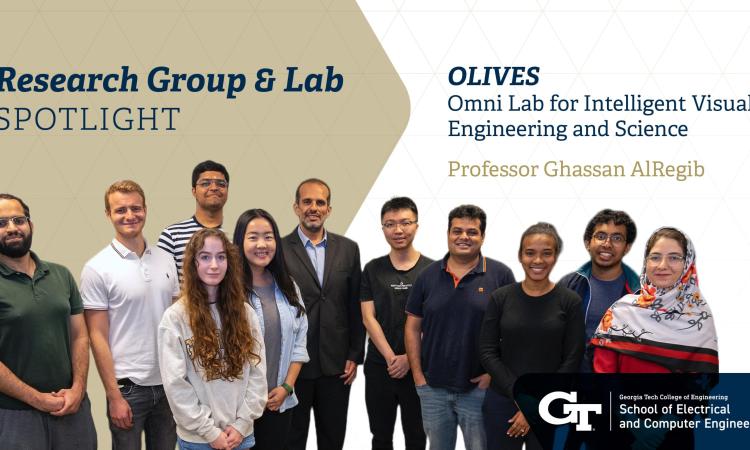
Ghassan AlRegib's Omni Lab for Intelligent Visual Engineering and Science (OLIVES) is is at the forefront of today’s computer vision and visual machine learning research.