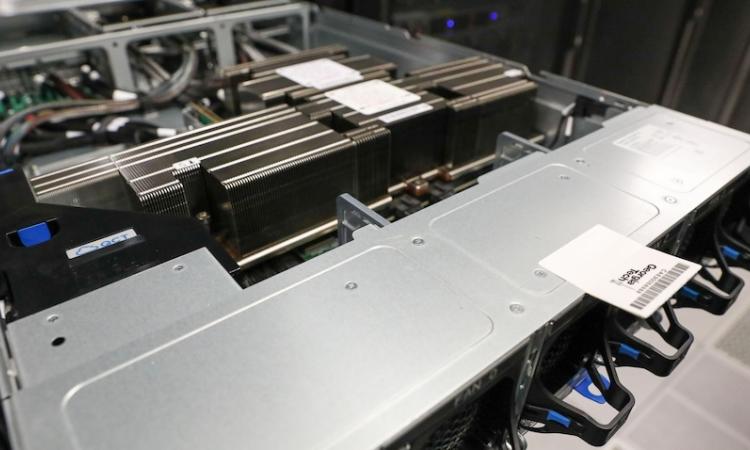
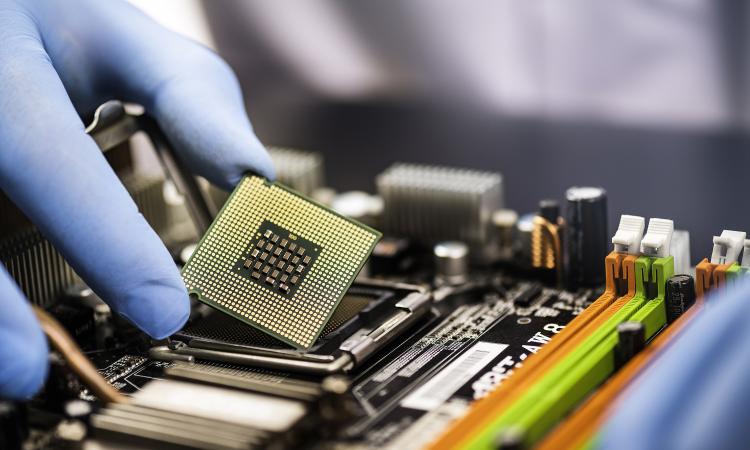
Georgia Tech is one of the first research universities in the country to receive the GH200 Grace Hopper Superchip from NVIDIA for testing, study, and research.
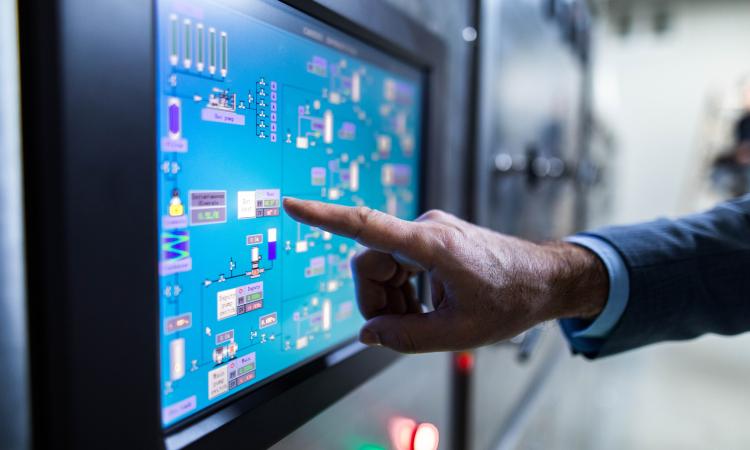
Engineers and computer scientists show how bad actors can exploit browser-based control systems in industrial facilities with easy-to-deploy, difficult-to-detect malware.
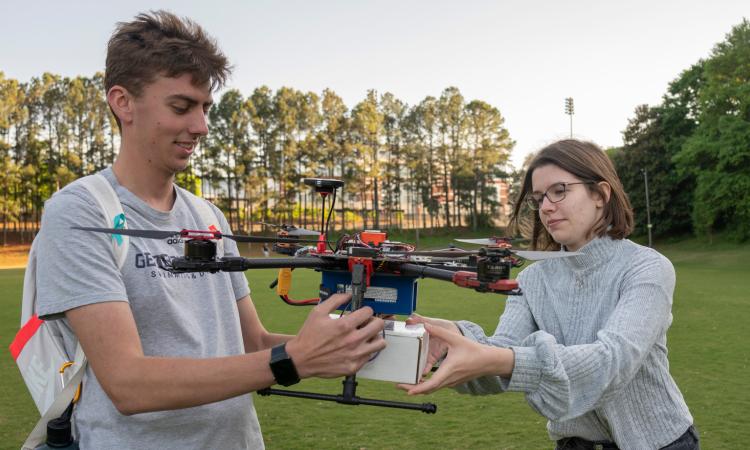
Imagine you’re a college student cramming for a test in your dorm room. What if there was a way for the school supplies and food to be delivered right to your dorm – not by car or foot, but by drone?
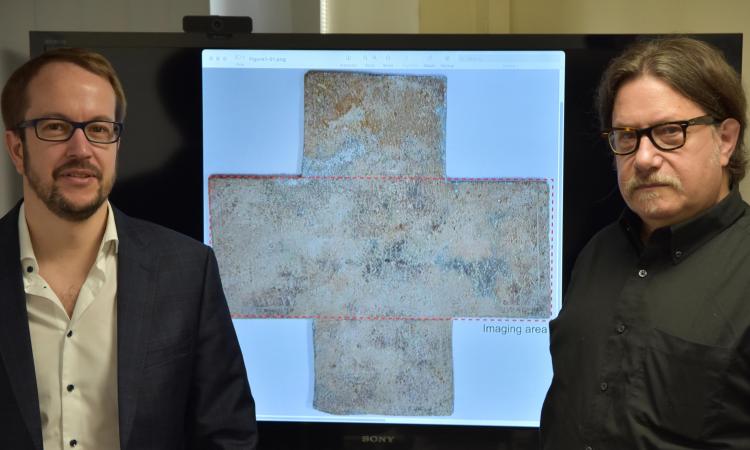
Researchers used terahertz imaging and signal processing techniques to look beneath the corroded surface of a 16th-century lead funerary cross, revealing an inscription of the Lord's Prayer.
The search for the new GTRI Deputy Director for Research for the Information and Cyber Sciences Directorate (ICSD) is complete, and on April 18, William H. Robinson, Ph.D., will assume the role.
Individual robots can work collectively as swarms to create major advances in everything from construction to surveillance, but microrobots’ small scale is ideal for drug delivery, disease diagnosis, and even surgeries.
The French National Research Agency has awarded a grant to Georgia Tech and Georgia Tech-Lorraine researchers to develop technology for a new class of cochlear implants.
Researchers at the Georgia Institute of Technology have found a detection method that could revolutionize cancer treatment by showing how cancers metastasize and what stage they are.
She is being recognized for her research contributions in “highly-efficient, power-dense and fault-tolerant multilevel converter-based medium-voltage drives.”
Replacing the potent greenhouse gas SF6 in high-voltage circuit breakers with a clean alternative is critical as the U.S. looks to upgrade its aging electrical infrastructure.
Harnessing the power of “phase-change” materials, Georgia Tech researchers have demonstrated how reconfigurable metasurfaces — artificial materials with extraordinary optical properties — are crucial to the future of nanotechnology.
Through a collaboration with Cisco, Georgia Tech Technology is pursuing 30 quick-turn research projects that touch on key priority areas such as internet for the future, capabilities at the edge, and optimized application experiences.
Clinical work begins with MagTrack, a cutting-edge assistive technology that enables power wheelchair users to control their connected devices and drive their power wheelchairs using an alternative, multimodal controller.
Two new research centers, representing an investment of about $65.7 million, have been awarded to Georgia Tech through the SRC-administrated Joint University Microelectronics Program 2.0, or JUMP 2.0.
This third year’s GTRI Graduate Student Research Fellowship Program (GSFP) will further the research collaboration across Georgia Tech’s schools and colleges, leading to innovations in everything from artificial intelligence to international policy.
The Icefin robot’s unprecedented look inside a crevasse, and observations revealing more than a century of geological processes beneath the ice shelf, are detailed in a new paper in Nature Geoscience.
Newly announced AI Hub at Georgia Tech will unite AI entities across campus, enabling the Institute to align on goals to become an international thought leader in AI.
This fall, the Institute will launch a foundational, interdisciplinary program to lead in research related to neuroscience, neurotechnology, and society.
Georgia Tech researchers have developed a first-of-its-kind automated measurement tool that can assess password protection policies across the internet.