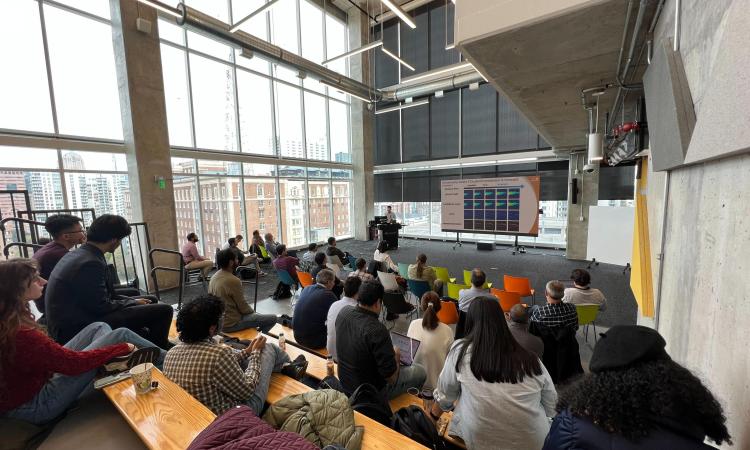
“Current Crisis,” a power grid modeling video game developed through the Georgia Tech VIP project led by Dan Molzahn, EPIcenter's initiative lead, simulates real-world power grid challenges.
Emerald White, an undergraduate in the School of Electrical and Computer Engineering, is making her voice heard through active participation in many different on-campus organizations.
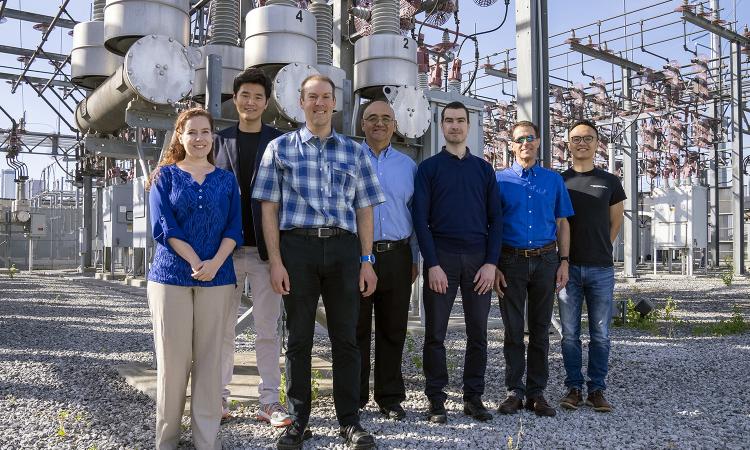
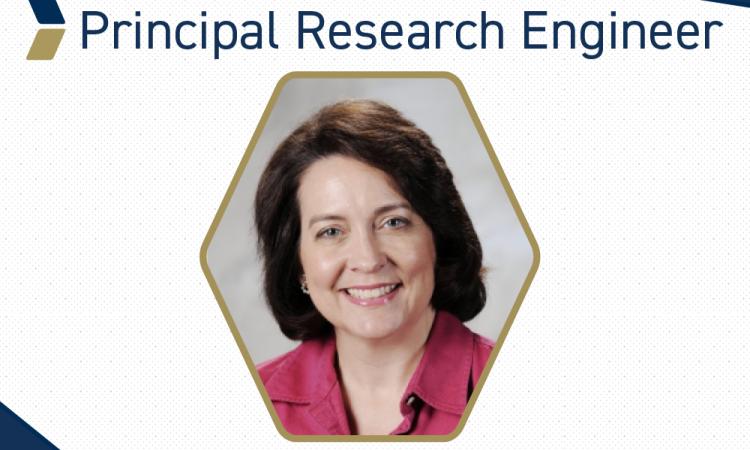
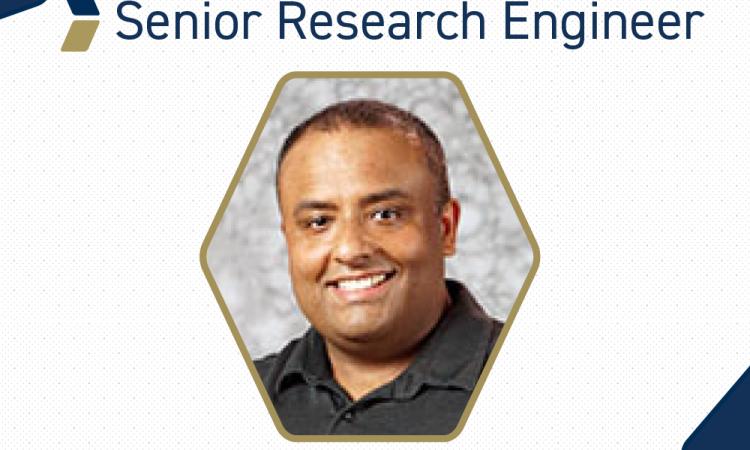
Hernandez-Mejia, who has worked at ECE’s National Electric Energy Testing, Research, & Applications Center (NEETRAC) since 2017, brings extensive experience to the member-driven electric utility research center.
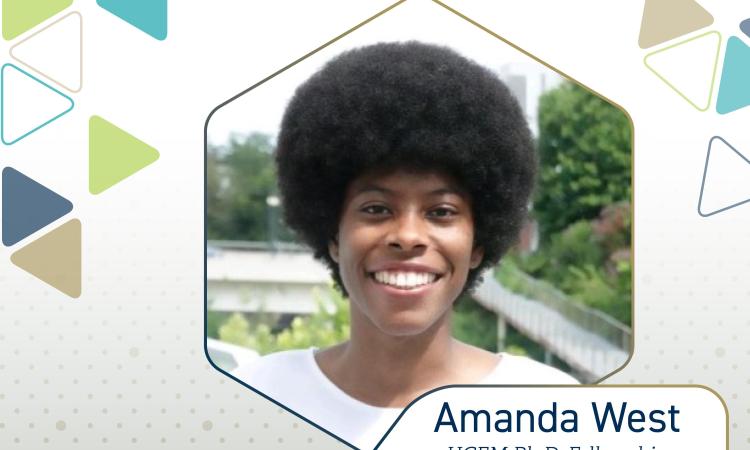
The UCEM Fellowship has the goal of increasing the number of outstanding engineering, science, and computing Ph.D. students from under-served populations.
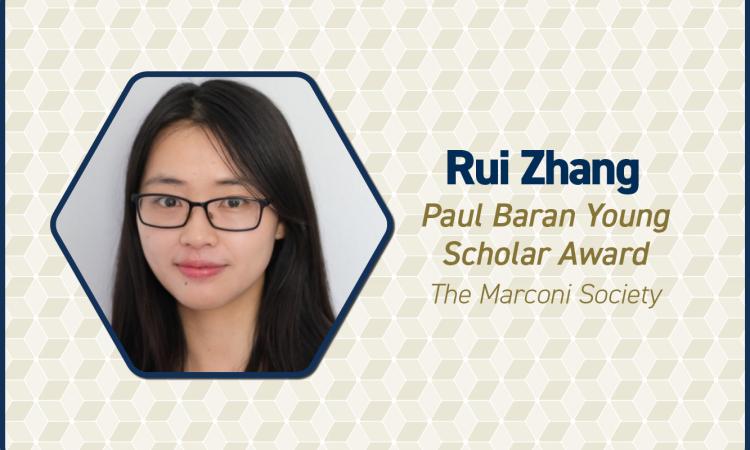
The Marconi Society Paul Baran Young Scholar Award honors the world’s most innovative young engineers in information and communications technology (ICT).
The pandemic has taken — and will continue to take— a heavy toll. Getting students oriented and helping them succeed will require innovative new approaches to student support.
The award recognizes PES student members from around the world who have chosen an academic path leading to an electric power and energy engineering career.
She is being recognized for her research contributions in “highly-efficient, power-dense and fault-tolerant multilevel converter-based medium-voltage drives.”
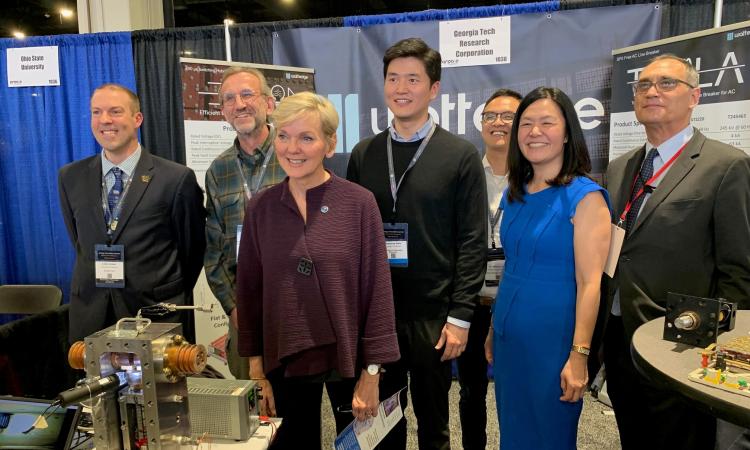
Replacing the potent greenhouse gas SF6 in high-voltage circuit breakers with a clean alternative is critical as the U.S. looks to upgrade its aging electrical infrastructure.
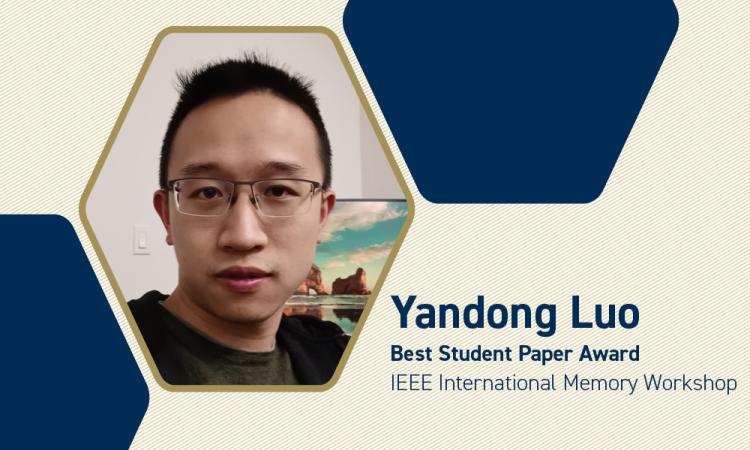
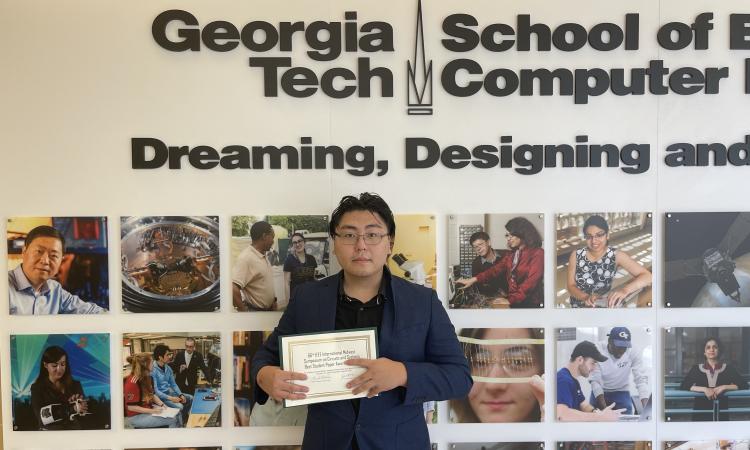
The paper presents a feasibility study on using a novel non-volatile memory technology.ECE Ph.D. candidate Yandong Luo has been recognized with the Best Student Paper Award at the 2022 Institute of Electrical and Electronics Engineers (IEEE) International
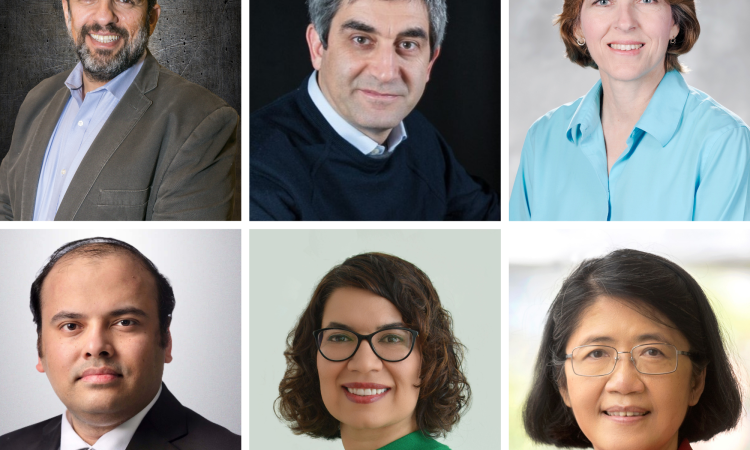
Six Georgia Tech faculty members were named IEEE Fellows, effective January 1, 2022. They are Ghassan AlRegib, Levent Degertekin, Bonnie Ferri, Arijit Raychowdhury, Maryam Saeedifard, and May Dongmei Wang.
With the ever-increasing demand for autonomous robotics to operate in the most visually ambiguous environments with the least amount of resources necessary, a team at Georgia Tech has developed the NeuroSLAM accelerator IC for edge robotics.
The Solar District Cup (SDC) is a competitive, nationwide competition where multi-disciplinary teams of students are challenged to design and model an optimized distributed energy system for one of three districts.
Georgia Tech and the U.S. DOE's National Renewable Energy Laboratory (NREL) have entered into an agreement to bolster the interactions, collaborations, and joint scientific output of both institutions.
Researchers at the Georgia Institute of Technology, Nokia Bell Labs, and Heriot-Watt University have found a low-cost way for backscatter radios to support high-throughput communication and 5G-speed Gb/sec data transfer using only a single transistor.
IMat's Executive Director (Professor Eric Vogel, MSE) and Innovation Initiative Leader (Professor Jud Ready, GTRI) have created a new Science Advisor position and a team of Initiative Leaders to shape the future of IMat.
Researchers at Georgia Tech have uncovered an innovative way to tap into the over-capacity of 5G networks, turning them into “a wireless power grid” for powering Internet of Things (IoT) devices that today need batteries to operate.
ECE Ph.D. student Aline Eid won two top honors at the 2021 IEEE International Symposium on Antennas and Propagation and USNC-URSI Radio Science Meeting (APS/URSI 2021), held December 4-10 both in a virtual format and in-person in Singapore.
ECE Professor Russell Dupuis spoke about the evolution of LEDs and lighting, as well as its future applications, on Acast, a podcast hosted by Lord John Browne, director of the Queen Elizabeth Prize for Engineering.
NEETRAC is an electric energy-focused, industry-supported center located in Forest Park, Georgia. The Center is part of the School of Electrical and Computer Engineering (ECE) and recently celebrated its 25th Anniversary on October 27.
ECE Ph.D. students Aline Eid and Asim Gazi recently participated in workshops geared toward developing and diversifying the next generation of academic leaders.