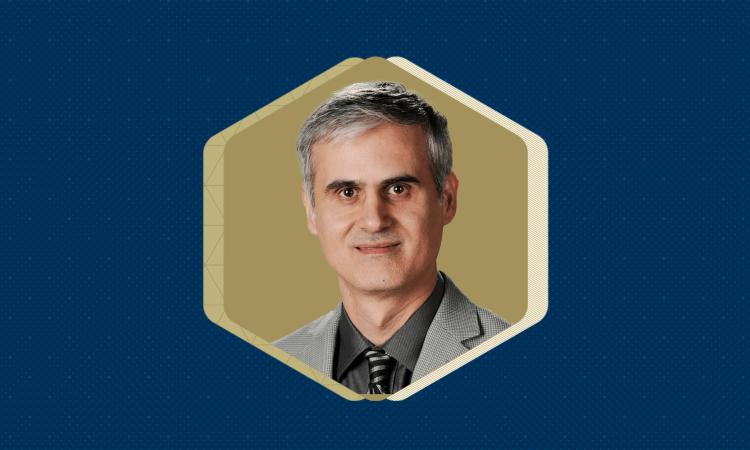
Christopher Rozell to lead Georgia Tech’s new Institute for Neuroscience, Neurotechnology, and Society, uniting disciplines to tackle the brain’s greatest challenges.
The ECE professor was named to the five-year appointment for outstanding scholarship, dedication to education, and excellence in service at Institutional, national, international levels.
“Current Crisis,” a power grid modeling video game developed through the Georgia Tech VIP project led by Dan Molzahn, EPIcenter's initiative lead, simulates real-world power grid challenges.
Himanshi Gupta, an ECE graduate student, and Faaiq Waqar, a third-year Ph.D. student, will each serve as the president of the ECE GSO for the next academic year.