
Jameson Gatewood came to Georgia Tech to study electrical engineering. He’s leaving with not only a master’s degree, but also a growing company in a field few engineers ever consider.
(text and background only visible when logged in)

(text and background only visible when logged in)
Jameson Gatewood didn’t expect his entrepreneurial journey to start in the checkout line at a Publix. As part of the CREATE-X track for his Capstone Design class, he was tasked with finding real-world problems that could inspire a startup idea. So, he began asking strangers about the biggest challenges in their lives.
But things weren’t going to plan for the electrical engineering major who is now set to graduate this semester with his master’s degree.
“That’s the way they teach the class, gauging the public for interest, which is great until you get out there and realize strangers don’t want to talk to you,” he said. “I kept getting weird looks from people and got tired of that pretty quickly.”
Though it’s not a fond memory, it marked the start of Gatewood’s path from classroom projects to real-world problem-solving.
By then, he was used to trying new things and pushing his comfort level; he explored many opportunities during his four and a half years at Georgia Tech, including joining the Solar Racing team and becoming a prototyping instructor at the Invention Studio.
“When I got to college, I had this sense that I needed to use my time well because the time you’re here is short,” he said. “I even tried ballroom dancing for a bit.”
That willingness to experiment would eventually lead him somewhere unexpected: pest control.
“It’s something I, and likely most people, don’t think much about, but I’ve really gained an appreciation for it,” he said. “Because without exterminators, we'd have roaches and rats everywhere. The better they do their job, the less we see them.”
After giving up on talking to strangers, Gatewood moved on to people in his network.

He ended up talking with a neighbor from his hometown of Jacksonville, Fla., who was complaining about how the exterminators wouldn’t get the dirt dauber nests off her house because it was not worth the time it took.
“My specialty is in power and energy, and pest control isn't that,” he said. “But it was still a way to use the engineering skills I had learned to directly help other people. To me that's just the best thing ever.”

The Pest Tech poster Gatewood and his team presented at the 2024 Capstone Design Expo.
That conversation inspired his capstone team to make a tool that removes the nests and the stain they leave behind for their project. It won a golden ticket, which is given to top teams at the Capstone Design Expo and fast-tracks the project for acceptance into the CREATE-X Startup Launch.
He started his master’s degree the following spring but wanted to maintain the momentum of the project over the summer. So, after graduating with his bachelor's degree, he brought on a friend, and they got to work.
“We knew that if we wanted to stick in the pest control industry, we needed to do something radically different,” Gatewood said. “For almost every single week of the summer, we had in-person meetings with people from every corner of the industry.”
All that hard work has culminated in turning that project into a company called Pest Tech, where he designs tools for pest control technicians.
(text and background only visible when logged in)

Gatewood shows off Pest Tech tools at Create-X Demo Day.

The customizable Multi-Key helps pest control professionals open any rodent trap.

The Termite Tool 6000 is designed to eliminate back pain when checking advance termite bait stations.

The Bait-Tube Holster attaches to the belts and holds multiple standard tubes.
Currently, three products are available, with the most popular being a customizable multi-key tool that’s especially useful for opening rodent boxes.
He does everything from ideation to design to fabrication with a 3D printer.
“When I came to campus, I had no idea what a makerspace was,” he said. “Getting involved with organizations like the Invention Studio and CREATE-X has given me experiences from all parts of the engineering process to go along with the electrical engineering knowledge from my degree.”
So far, the company has sold over 100 units all over the United States. After graduating this weekend, he’ll start a full-time job while keeping his entrepreneurial spirit alive. He plans to ramp up Pest Tech, improving quality by moving from plastic to metal materials, and developing more products.
It’s not something he ever envisioned himself doing, but at least for now, it’s the place he feels he was meant to be.
“I can go into my room, open up my computer, and design something, print it, then put it in somebody's hand, and it's actually transforming the way that they are doing their job, which I think is amazing,” he said. “Engineering is all about finding solutions for problems that affect people, and what’s motivated me is seeing how my designs have helped people.”
(text and background only visible when logged in)
Related Content
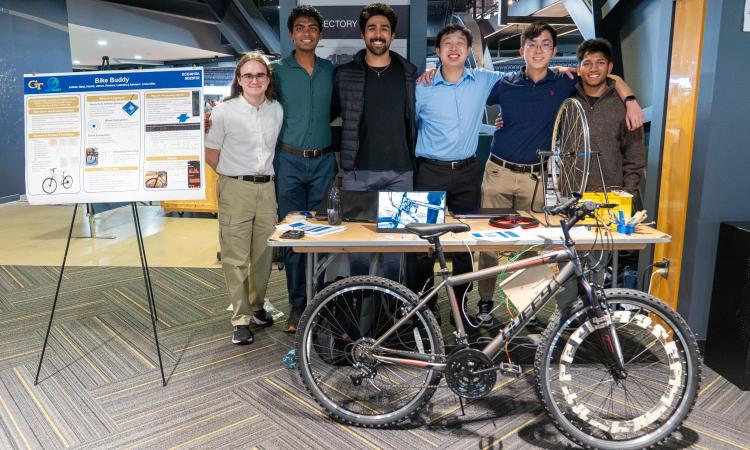
Bike Buddy Rolls to Victory as Top ECE Project at Fall Capstone Expo
The predictive cycling system headlined an Expo packed with ECE innovations across health tech, wearables, financial computing, smart home automation, and more.
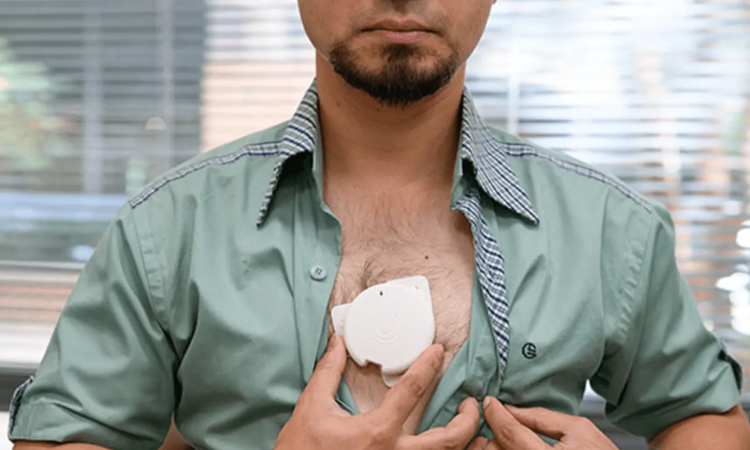
Georgia Tech Startup Sets Sights on Transforming Heart Failure Care
Professor Omer Inan and his lab developed a lightweight wearable patch designed to continuously monitor cardiac activity, providing heart failure patients and their doctors a more complete view of how the heart functions in everyday life.