
As Professor Ed Coyle steps down as director of Georgia Tech's Vertically Integrated Projects (VIP) program, one of higher education's leading student research initiatives enters a new chapter of growth.
(text and background only visible when logged in)

Professor Ed Coyle with students in his Smart Stadium VIP team, a project that has run continuously for 25 years and uses sports and entertainment venues as living laboratories for technology research.
(text and background only visible when logged in)
In his early days, before he built an academic program made up of thousands of students, Professor Ed Coyle needed computers.
His department at Purdue University couldn’t spare any at the time, but a colleague in development pointed him to Comdisco, a company in Chicago that leased computers and agreed to give him machines that were coming back in from an expired lease. They were not the latest and greatest computers, but they would do the job.
So, he and fellow professor, Hank Dietz, rented a truck, drove north from Purdue, loaded two pallets of aging PCs onto the back and hauled them home. Out of roughly 25 machines, a graduate student managed to get 13 working.
“That was the hardware that Leah Jamieson, Hank Dietz, and I used to start the Engineering Projects in Community Service (EPICS) program,” Coyle said. “Three decades later, the program it evolved into has shown how research can be more inclusive and better sustained, by overcoming the barriers between semesters and among disciplines.”
The program is now known as Vertically Integrated Projects, or VIP, where students at all levels work in long-term, large-scale, multidisciplinary, team-based projects embedded in faculty research.
This summer, Coyle stepped down as director of VIP at Georgia Tech, where the program came of age. Professor Morris Cohen will take over leadership of the program.
“It’s difficult to think about the big picture and stay focused on the small details, but Ed has been able to do both while building VIP,” Cohen said. “That’s what’s allowed it to grow the way it has, and I’m really honored to be part of it going forward.”
Coyle isn’t moving away from VIP completely. As the program has grown, more of his work now lives within the VIP Consortium, a nonprofit network of more than 60 universities with their own VIP programs, where he will now focus on its continued growth.
(text and background only visible when logged in)
(text and background only visible when logged in)
The Beginnings
The origins of VIP started at Purdue in 1995. Coyle, Jamieson, and Dietz were confronting a “crushing experience” for undergraduate students.
“Students were overloaded with coursework and were working jobs to afford rising tuition, and thus had little opportunity to engage in sustained, meaningful projects,” Coyle said.
Their first attempt for a solution, EPICS, paired student teams with community organizations. It worked up to a point, but the model was hard to scale. Faculty had little incentive to participate, and without that alignment, the program struggled to grow.
The second version—what Coyle refers to as VIP 1.0—made a crucial shift by embedding the vertically integrated student teams directly into faculty research.
Now students could earn academic credit for contributing to real research over multiple semesters. Faculty, in turn, gained a large, evolving team that could meaningfully advance their work.
“VIP works because it enables everyone to work together in ways that benefit all of them,” Coyle said.
When Coyle arrived at Georgia Tech in 2008, recruited in part for his VIP vision, he brought the model with him looking to expanded it further with the help of VIP co-director Randal Abler. The effort was supported by endowments provided by Jim and Hellen Carreker.
Sustained Growth and Impressive Outcomes
Today, VIP at Georgia Tech looks less like a program than an ecosystem.
There are 114 teams spanning every college and the Georgia Tech Research Institute, with roughly 2,500 students enrolled each semester. About 36 percent of Georgia Tech graduates have participated in VIP at some point.
Nearly 20,000 students have taken part in VIP since its launch.
The structure remains simple, with students joining projects aligned with a faculty member’s research and staying for multiple semesters or sometimes years. Teams are intentionally large, averaging about 23 students, and vertically integrated, meaning sophomores work alongside juniors, seniors, graduate students, and postdocs.
(text and background only visible when logged in)

Cohen (left) and Coyle. Under Coyle's leadership, VIP expanded to 114 teams and roughly 2,500 students each semester at Georgia Tech. Cohen assumed leadership of the program this summer.

Members of the Georgia Tech VIP operations team (L-R): Yvonne Coleman, faculty support coordinator; Aiyana Ali, academic coordinator, Makesi Hamilton, application developer; Morris Cohen, director; Ed Coyle, founder and director of VIP Consortium; Deon O’Bryant, assistant director; Julie Sonnenberg-Klein, executive director; Leah Misemer, assistant director; and Chris Malbrue, academic program manager.
Students start as novices, grow into contributors, and often become leaders. The continuity allows for projects that extend well beyond a semester’s constraints, with some lasting decades.
“You’re working with both new and experienced team members, so you learn a lot just by collaborating,” said Mose Kim, a computer science major and VIP student. “Your ideas actually become part of a project. It ends up being a much more hands-on experience than what you usually get in the classroom.”
(text and background only visible when logged in)
VIP Projects at a Glance
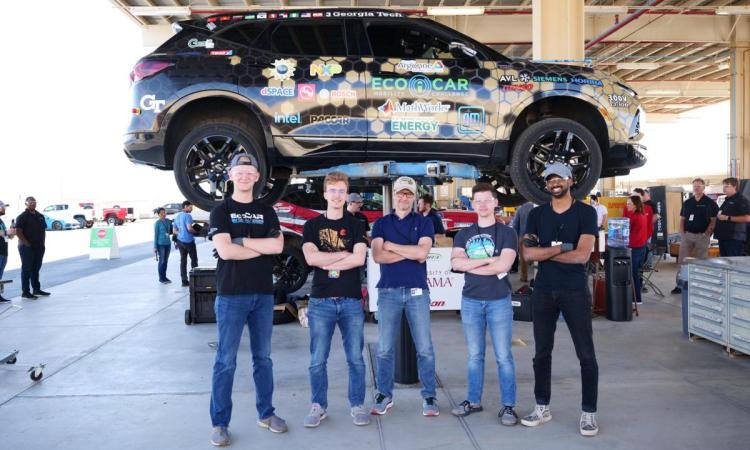
ECECar
About: Developing, building, and testing advanced connected and electrified vehicle technologies as part of the U.S. Department of Energy's EcoCAR collegiate competition.
Team Schools: George W. Woodruff School of Mechanical Engineering; School of Electrical and Computer Engineering; College of Computing; Scheller College of Business; School of Economics; and School of Literature, Media, and Communication.
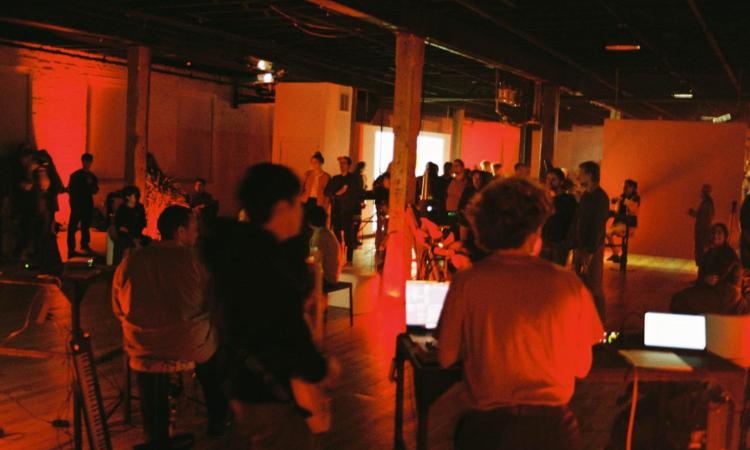
Interacting with Sound and Space
About: Developing new ways for people to create, experience, and interact with immersive music and multimedia environments using emerging technologies.
Team Schools: School of Music; College of Computing (Computational Media, Human-Centered Computing, and Human-Computer Interaction); and School of Electrical and Computer Engineering.
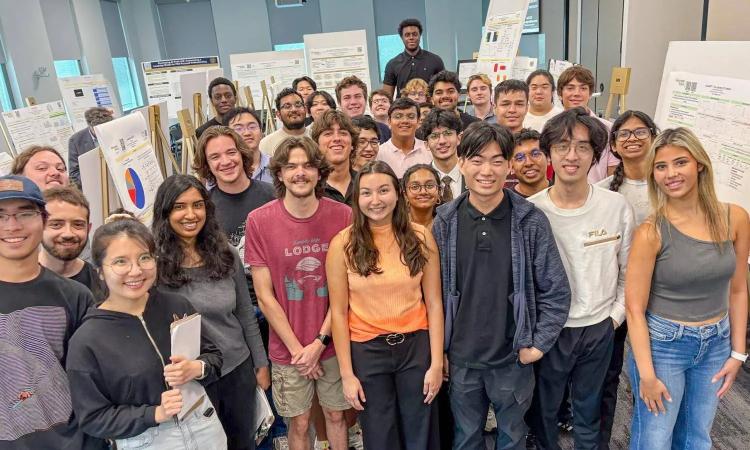
AI Makerspace Nexus
About: Working to democratize access to the AI Makerspace by creating AI tools, educational resources, and computing environments that empower students to learn, experiment with, and apply AI technologies.
Team Schools: School of Electrical and Computer Engineering; College of Computing; College of Design; School of Biomedical Engineering; School of Civil and Environmental Engineering; and George W. Woodruff School of Mechanical Engineering.
Outcomes Too Difficult to Ignore
Students who participate in VIP for three or more semesters are about three times more likely to have a job at graduation than those who do not, according to internal research led by Julie Sonnenberg-Klein, assistant director of Georiga Tech VIP.
For faculty, the presence of a large, stable team can also be an advantage when pursuing funding. Research proposals increasingly emphasize education and broader impact, and VIP provides both while enabling work to continue at a larger scale.
“Faculty are excited to be part of VIP because it connects them with talented, motivated students working on real projects,” said Jack Bringardner, who co-directs the VIP program at Colorado School of Mines. “Students tell me it’s often the work they talk about in interviews, because it shows what they built, how they contributed, and how they worked on a team.”
Many industry partners now seek direct involvement in VIP by funding projects or recruiting from teams.
“It has become a premier workforce development program because it mirrors the way work actually happens in the real world,” Coyle said.
Beyond Georgia Tech
Even in the early years, representatives from other universities were interested in replicating what they were seeing at Georgia Tech, and by the mid-2010s, those informal conversations had begun to coalesce into something more organized.
Backed in part by a $5 million grant from the Helmsley Charitable Trust, Georgia Tech helped convene a group of institutions interested in adopting the model.
The result was the VIP Consortium, a 501(c)(3) nonprofit in Georgia that serves as both a hub and a support system for universities with their own VIP programs.
The Consortium now includes more than 60 institutions worldwide, from nearby schools like the University of Georgia and Kennesaw State University to leading U.S. engineering programs at Purdue University, New York University, and Rice University, as well as international programs including Inha University in South Korea, National Dong Hwa University in Taiwan, and the University of St Andrews in Scotland. Dozens more are in various stages of exploration or adoption.
Some programs begin in engineering, others in the sciences or even the arts, but the core elements—large, vertically integrated teams, long-term projects, and close alignment with faculty work—are always the same.

Participants gather for the 2026 VIP Consortium Annual Meeting at Georgia Tech. The event brought together faculty, staff, and students from more than 60 institutions to share best practices, showcase projects, and discuss the future of the VIP model.

Representatives from National Dong Hwa University (NDHU) in Taiwan pose during the 2026 VIP Consortium Annual Meeting at Georgia Tech. NDHU is among the international institutions that have adopted the VIP model.

A VIP student discusses research during a poster competition highlighting the hands-on, multidisciplinary projects that are a hallmark of the program.
VIP For Everyone
What began with a refurbished set of computers has expanded into something far broader, and Coyle will now work to further grow and stabilize the VIP Consortium.
“None of this would have been possible without the people who believed in the vision early and helped sustain it over the years,” Coyle said. “I’m especially grateful to the Georgia Tech leaders who championed VIP at critical moments, including Gary May, Doug Williams, Arijit Raychowdhury, and Raheem Beyah, as well as the Georgia Research Alliance and its leaders Mike Cassidy, Susan Shows, and Tim Denning. Their support has been instrumental in helping the program grow from an idea into a global community.”
The current challenge is less about proving that the model works than making room for it within systems that weren’t designed for it, according to Coyle.
University accreditation requirements, particularly around senior design courses, can interrupt the continuity that makes long-term teams effective. Departments vary in how they count VIP toward degree progress, and even at institutions where it is well established, the program can be difficult to categorize.
“The real work is figuring out how to make something like VIP function in every existing environment,” said Coyle. “I really think it has a chance to succeed in an even larger way. Our goal is to make VIP available to all faculty and students anywhere in the world.”
(text and background only visible when logged in)
Related Content
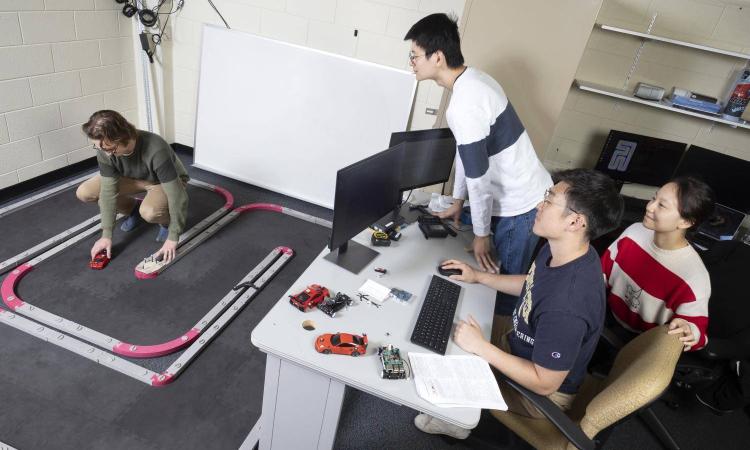
VIP Program Engages Students in Long-Term Projects, Bridging Research and Classroom Learning
Vertically Integrated Projects involve students from first year to Ph.D. in startup-like environments that also support faculty research.
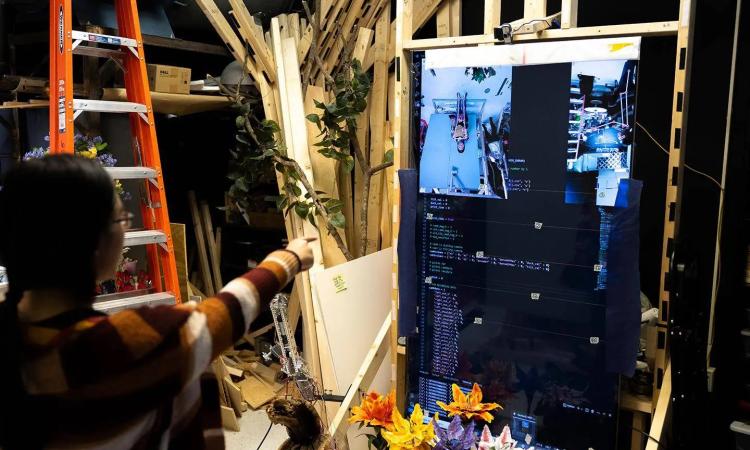
Electronic ARTrium Exhibit Offers Interactive Animatronic Experience
The project completed by ECE Professor Mary Ann Weitnauer’s VIP team takes players through a game driven narrative that uses motion tracking technology and animatronics to create an immersive environment.