
Georgia Tech Draper Scholars Laurel Hilger, Gus Richter, and Kevin Zhang presented thesis research at a prominent national security symposium in Cambridge, Mass.
(text and background only visible when logged in)

(text and background only visible when logged in)
A trio of Draper Scholars from the Georgia Tech College of Engineering traveled to Cambridge, Mass., for the third annual Draper Research Symposium, where they got to share research and learn about the future of national security.
Ph.D. students Gus Richter and Laurel Hilger, along with master’s student Kevin Zhang, were among the 53 students conducting research in areas critical to national security who traveled to the nonprofit laboratory’s headquarters.
The event connected them with peers and industry experts. Students took part in a plenary session and a poster session where they got to discuss their research and other topics with Draper technical staff.
Of those 53 students, Richter was one of the select few who presented their research to the entire symposium.
"I enjoyed evangelizing on the importance of longwave radio, especially given the rising threats of GPS jamming and space weather disruptions,” Richter said. “Events like [the Draper Research Symposium] are important because they help foster a pipeline of talent from the university system to industry and the federal workforce. The three of us connected with engineers from across the company who have deep experience working on national security-related projects."
There was also a keynote speech by National Defense Industrial Association Emerging Technologies Institute Executive Director Arun Seraphin on national security and STEM workforce hiring.
Draper is an independent nonprofit engineering innovation company specializing in the design, development, and deployment of advanced technology solutions to problems in national security, defense, space exploration, health care, and energy.
The Draper Scholars Program is a selective program that allows graduate students to integrate thesis research with hands-on experience using Draper facilities and expertise.
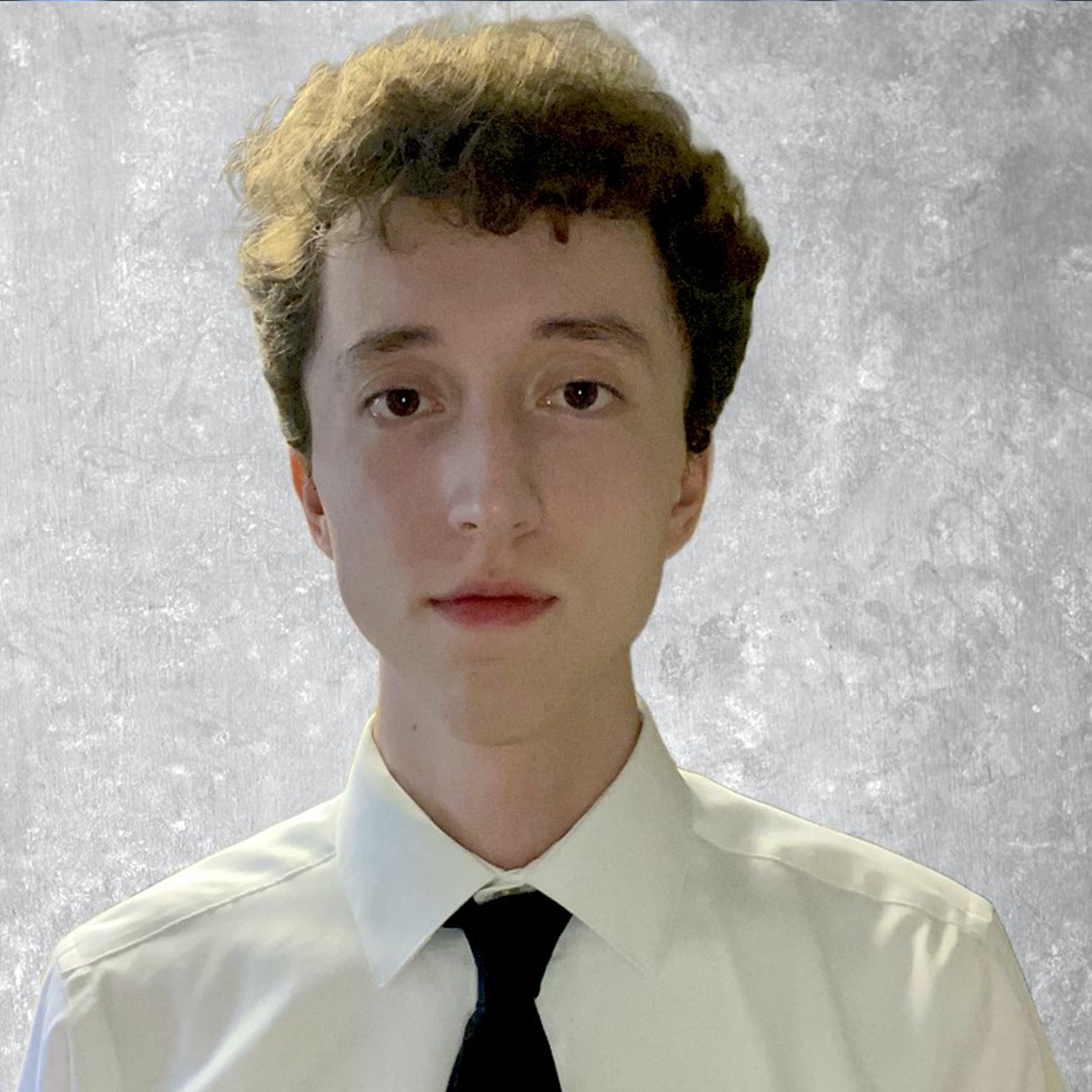
Gus Richter
School of Electrical and Computer Engineering
Advisor: Professor Morris Cohen
Thesis: Fast Precision Data-Driven Denoising of Very Low Frequency Naval Communications and PNT
Very low frequency (VLF) radio waves enable unique defense applications, including submarine communication, jamming-resistant PNT, and ionospheric situational awareness. However, the VLF environment is saturated with atmospheric radio noise, and prior denoising methods are either too slow, crude, or restrictive. The project demonstrates the superior performance of singular spectrum analysis using a state-of-the-art simulation of VLF data.
About Richter: Gus Richter is a 2nd-year ECE Ph.D. student who researches under Cohen in the Low Frequency Radio Lab. His interests are highly interdisciplinary, cutting at the intersection of electromagnetics, communications, machine learning, and statistical signal processing. He also volunteers at the Georgia Intellectual Property Alliance, a non-profit that brings together stakeholders to promote IP awareness and engagement throughout the State of Georgia.
(text and background only visible when logged in)
(text and background only visible when logged in)
(text and background only visible when logged in)

(text and background only visible when logged in)
Laurel Hilger
School of Materials Science and Engineering
Advisor: Associate Professor Blair Brettmann
Thesis: Enabling Direct-Ink-Writing (DIW) of Polyimide Composites for Functionally Graded RF Devices
The research investigates polyimide (PI) processing techniques for additive manufacturing to take advantage of polyimide's high thermal stability and chemical resistance. Introducing dielectric nanoparticles into polyimide composites enables low-loss insulating dielectric materials for RF applications. Novel RF devices may be designed with these composite inks with graded permittivity deposited with active mixing DIW printing.
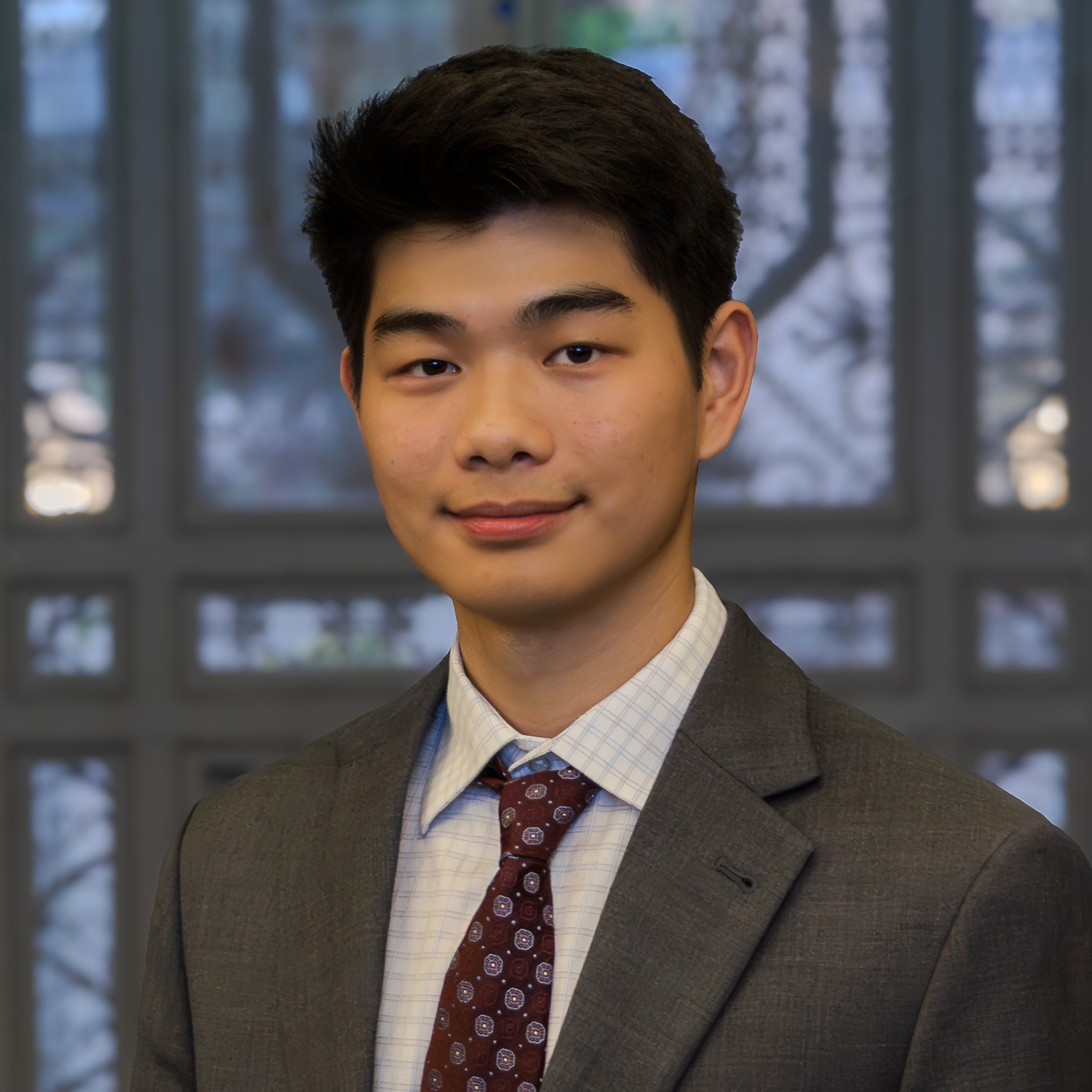
About Hilger: Laurel Hilger is a second-year MSE Ph.D. student in the Brettmann Group. Her research interests include 3D printing, polymer engineering, electrochemistry, and rheology. In her free time, Laurel leads a middle school club called Girls Excelling in Math and Science (GEMS) to inspire young girls to seek careers in STEM fields. She also enjoys reading and walking dogs at the Atlanta Humane Society.
Kevin Zhang
Daniel Guggenheim School of Aerospace Engineering
Advisor: Associate Professor John Christian
Thesis: Optimized Camera Calibration using Star Fields - Enabling Precision Optical Navigation for Spacecraft
Optical navigation with cameras is an important capability for autonomous operations in cislunar and deep space missions. Unfortunately, all cameras are plagued with distortion, which must be calibrated on-orbit using images of known star fields. My research optimizes the camera calibration process by selectively imaging information-rich regions of stars and characterizing distortion with statistically learned models. I conducted experiments at Draper with a space-grade camera to show pointing errors could be reduced by more than 100 arcsec using my proposed approach.
About Zhang: Kevin Zhang is a second-year master’s student studying Aerospace Engineering at Georgia Tech. His research focuses on spacecraft optical navigation, and he has interests in rendezvous and proximity operations, space domain awareness, and communication networks. He is a researcher in the Space Exploration and Analysis Laboratory (SEAL) under his advisor, associate professor John Christian. Zhang is also a Draper Scholar with the Perception and Embedded ML group. He received his B.S. in Aerospace Engineering from Texas A&M.
(text and background only visible when logged in)
Related Content
What if Hospitals Could Automatically Protect Patients from Cyber Threats?
With an award for up to $12 million from ARPA-H, a team of researchers led by assistant professor Brendan Saltaformaggio will develop an advanced cybersecurity platform to help hospitals proactively identify and fix vulnerabilities.
New Algorithm Identifies Increase in Critical Infrastructure Security Vulnerabilities
Led by Ph.D. student Ryan Pickren, the research discovered 37 times more vulnerabilities in industrial control systems (which oversee and automate industrial processes) than was previously thought.